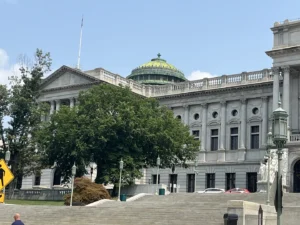
The following Bill passed the House 102-101
The Bill: HB1549
Title: Minimum Wage Act Amendment
What Does it Mean:
A tiered minimum wage system based on county classification. Starting January 1, 2026, the minimum wage will vary by county:
- First-class counties (e.g., most populated): $15 per hour, with annual cost-of-living adjustments based on the Consumer Price Index for Urban Consumers (CPI-U).
- Second-class, second-class A, third-class, certain fourth-class, and sixth-class counties: $12 per hour in 2026, increasing to $15 per hour by 2028.
- Other counties (fourth, fifth, sixth, seventh, and eighth-class): $10 per hour in 2026, rising to $12 per hour by 2028.
The bill allows employers to pay a lower training wage to workers under 20 years old for the first 60 days, with restrictions to prevent displacing existing workers. Annual cost-of-living adjustments will be published by the secretary, rounded to the nearest five cents. It takes effect 60 days after enactment.
The Go Big Small Biz Network’s Position: We oppose.
The GBSBN is in strong opposition to the proposed minimum wage legislation that would impose a tiered system based on county classification. While the intent to raise wages may be well-meaning, this approach is fundamentally flawed, inequitable, and harmful to small businesses—particularly in rural and less densely populated areas.
Varying wage floors across multiple county classes will create unnecessary confusion and administrative burdens for businesses that operate in more than one county, increasing the risk of non-compliance and legal exposure.
Wage policy should be rooted in fairness, simplicity, and support for economic growth across all regions—not deepen existing divides. A single, reasonable statewide minimum wage—phased in to allow small businesses to adjust—is a more just and practical solution.
Lawmakers need to reconsider this misguided bill and work with small business leaders to craft a fairer alternative.
Risks to Small Business:
- Increased Labor Cost
- Reduced Profit Margin
- Price increases
- Job Cuts/Reduced Hours
House Video-Representative Jesse Topper
New Federal Data Reveals California Has Lost Over 36,000 Fast Food Jobs Since $20 Minimum Wage Law
The Go Big Small Biz Network exists to prevent government overreach into small businesses. We are funded by our monthly subscribers of $19/monthly. Please Join the movement.